Some stories are written to entertain. Others quietly reshape culture. And a rare few refuse to fade, carrying their meaning far beyond the moment they were created. Jill Nunn Burton’s The Wish Book belongs to that rare final category, a historical novel that explores how an idea born inside a corporate office in 1930s Chicago grew into something far larger than anyone expected.
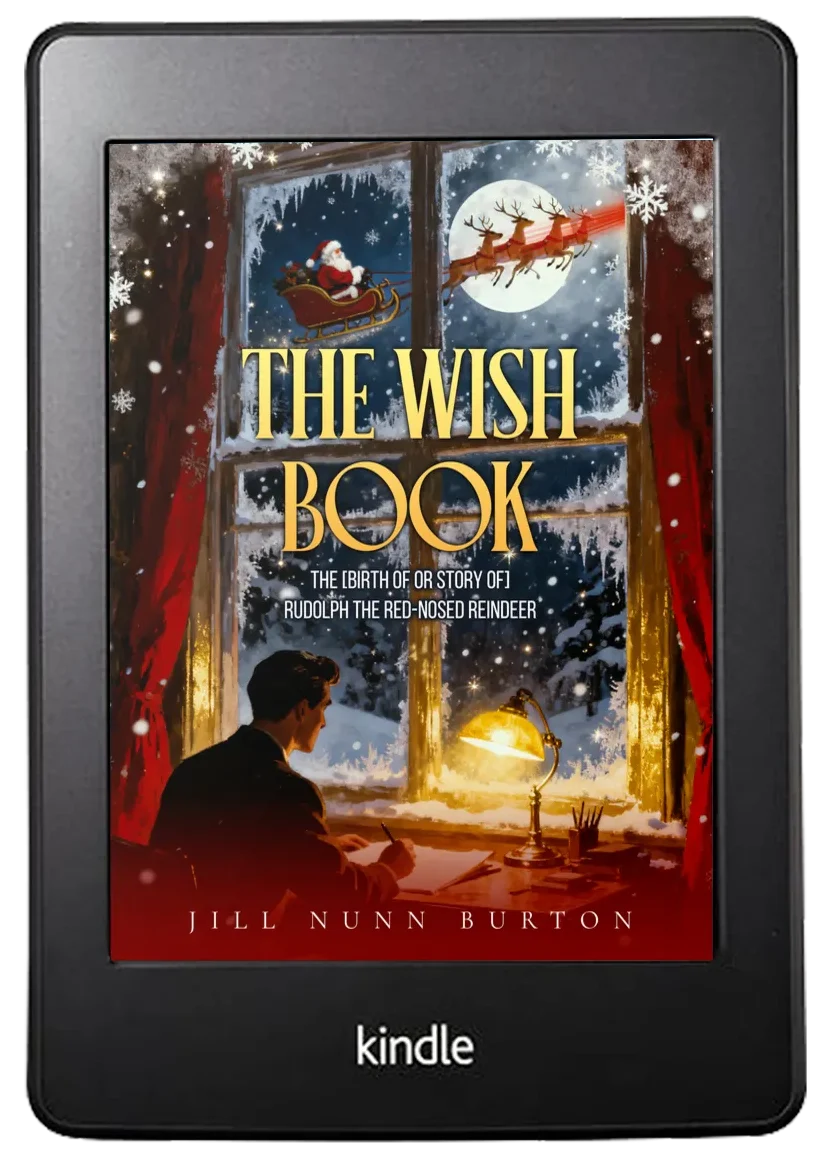
At its center is Robert “Rob” May, a Montgomery Ward copywriter navigating the high-pressure world of seasonal retail marketing. In the late 1930s, department stores are not just businesses; they are cultural engines. The holiday season is a competitive arena where creativity is measured against sales charts, catalog demand and rivals like Sears. Within this environment, Rob is tasked with producing something fresh, meaningful and unforgettable.
What he creates begins as a simple promotional story, but it quickly takes on a life of its own. The idea evolves into a children’s narrative that captures the imagination of families across America. Yet success arrives with complexity. Rob does not own the rights to his creation, a reality that reflects the strict “work-for-hire” systems of the time. The story’s success belongs to the company, even as its emotional heart belongs to its creator.
This tension becomes one of the most compelling threads in The Wish Book. It raises timeless questions: Who truly owns creativity? What happens when inspiration becomes intellectual property? And how does a creator move forward when their most successful work is no longer fully theirs?
But the novel is not only about corporate contracts and legal rights. It is also about resilience in the face of personal loss. Rob’s journey is deeply shaped by his relationship with his wife, Lynnie, whose warmth and faith provide emotional grounding throughout the story. Her encouragement and hope influence not only his personal life but also the emotional tone of his creative work. Even as illness and grief enter their lives, the memory of her presence continues to shape Rob’s decisions long after.
Surrounding Rob is a richly drawn cast of characters who reflect the collaborative, often unpredictable world of 1930s Chicago. From Johnny Marks, whose musical instincts help transform ideas into cultural touchstones, to Simon in legal, who navigates the fine line between corporate responsibility and ethical flexibility, each character adds depth to the unfolding legacy. Their conversations, debates and quiet interventions help push Rob’s creation into something enduring.
The setting itself plays an essential role. Chicago in this era is alive with radio broadcasts, holiday catalog excitement and anticipation for events like the 1939 World’s Fair. Inside grand venues such as the Palmer House Hotel’s Empire Room, music and ambition blend seamlessly, reflecting a city where creativity and commerce constantly intersect.
As Rob’s story grows beyond expectation, The Wish Book explores how legacy is built not just through success, but through endurance. Some ideas fade when their initial moment passes. Others, like Rob’s creation, continue evolving through adaptation, reinterpretation and cultural memory.
Ultimately, the novel reminds readers that legacy is not always planned. Sometimes it emerges from ordinary work, shaped by emotion, circumstance and timing. And once a story connects deeply enough with people, it resists disappearance.
The Wish Book is a testament to that endurance. It is a story about creativity that outgrows expectation, love that outlasts loss and ideas that refuse to fade even when their origins are nearly forgotten. Through its richly layered narrative, the novel invites readers to consider their own creative footprints and the lasting impact of what they choose to bring into the world.
In the end, The Wish Book is not just about a famous holiday tradition; it is about the human stories behind it and the legacy that continues long after the final page is turned.
Visit my Profile : https://x.com/JillNunn21627
#christmashistory #chicagohistory #historicalfiction #copyrightstory #holidaystory #rudolph #rednose